Exploring AI Video Generation Models in 2025: Strengths, Shortcomings, and Future Horizons
In the rapidly evolving landscape of artificial intelligence, video generation has emerged as one of the most transformative applications. As of August 2025, AI models can now create realistic videos from text prompts, images, or even audio, democratizing content creation for filmmakers, marketers, educators, and hobbyists alike. These tools leverage advanced techniques like diffusion models and transformers to simulate physics, emotions, and narratives. However, they're not without flaws issues like inconsistencies, ethical concerns, and computational demands persist.
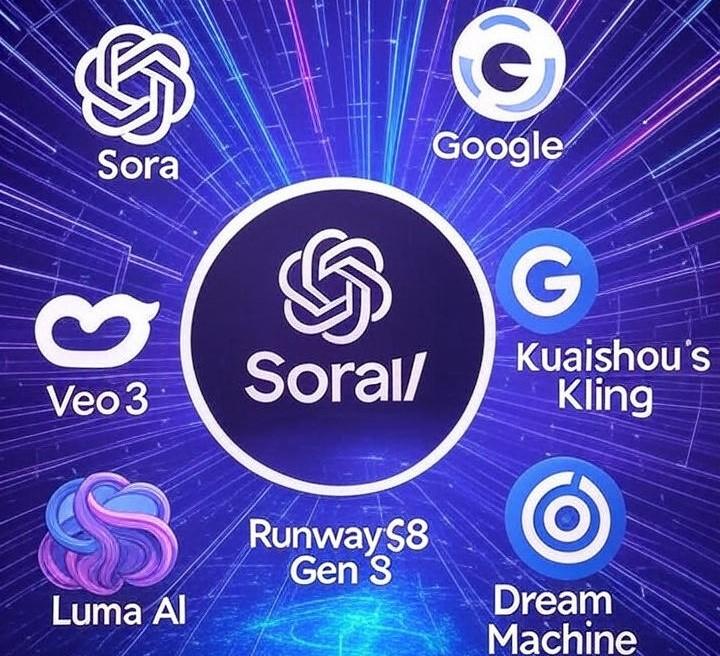
This blog post provides an unbiased overview of the leading AI video generation models available today, based on recent analyses and user experiences. We'll examine where each shines, where it falls short, and conclude with a look at the future trajectory of this technology. The models selected OpenAI's Sora, Google's Veo 3, Kuaishou's Kling, Runway's Gen-3, Luma AI's Dream Machine, and Hailuo MiniMax represent the top performers in 2025, drawn from comprehensive comparisons across industry reports and benchmarks.
OpenAI's Sora
Sora, launched by OpenAI, remains a benchmark for text-to-video generation, capable of producing up to 60-second clips at high resolutions. It excels in interpreting complex prompts, blending creativity with realism.
Where It Shines:
- Cinematic Quality and Realism: Sora generates visually stunning videos with excellent temporal consistency, simulating real-world physics like fluid motion and lighting. It's particularly strong in creating drone shots, 3D animations, and mixed-media outputs, making it ideal for storytelling and creative projects.
- Prompt Flexibility: Handles long, detailed prompts (up to 135 words), allowing for diverse outputs like imaginative scenes or accurate recreations.
- Customization Options: Users can tweak styles, effects, and colors, reducing production time for filmmakers.
Where It Falls Short:
- Lack of Logical Depth: Videos often lack coherent logic or understanding of cause-and-effect, leading to hallucinations or nonsensical elements. It struggles with fine details, like consistent object interactions or authentic human emotions.
- Accessibility and Cost: Limited public access and high computational costs make it less practical for casual users.
- Ethical Concerns: Potential for misuse in deepfakes, with outputs sometimes portraying unrealistic human experiences.
Google's Veo 3
Google's Veo 3, an evolution from DeepMind's earlier models, integrates video with audio, generating clips up to 2 minutes long. It's embedded in tools like Google Labs and focuses on multimodal inputs.
Where It Shines:
- Integrated Audio and Realism: Produces synchronized dialogue, music, and ambient sounds, with highly realistic physics and human movements. It's excellent for natural scenes, making it hard to distinguish from real footage.
- High Resolution and Consistency: Supports 1080p outputs with strong temporal coherence, ideal for professional video production and multilingual content.
- Versatility: Handles complex prompts involving emotions and environments, outperforming in physics simulations like object interactions.
Where It Falls Short:
- Inconsistencies and Prompt Adherence: Occasional glitches in motion or scene logic, especially in complex narratives. Outputs can be incoherent despite high quality.
- Cost and Accessibility: Expensive (e.g., $250+ for extensive testing), with risks of misinformation from hyper-realistic deepfakes.
- Limited Length and Creativity: Struggles with very long clips or highly abstract ideas, and setup can feel technical.
Kuaishou's Kling
Kling, from Chinese tech firm Kuaishou, emphasizes high-definition video from text or images, with versions like Kling Pro offering advanced features. It's accessible via apps and APIs.
Where It Shines:
- High-Quality Output: Generates 1080p videos with realistic motions, camera angles, and animations, excelling in dynamic scenes like action or nature.
- Affordability and Speed: Economical credit system and fast generation make it user-friendly for quick prototypes or social media content.
- Image-to-Video Strength: Strong in converting static images to fluid videos, with good lip sync and environmental details.
Where It Falls Short:
- Inconsistencies in Complex Scenes: Can produce unusable results with artifacts or poor adherence to prompts in intricate setups.
- Regional Limitations: Primarily optimized for certain languages or styles, with occasional issues in global accessibility.
- Dependency on Inputs: Relies heavily on high-quality prompts; weaker in abstract or highly creative tasks compared to competitors.
Runway's Gen-3
Runway ML's Gen-3 Alpha (and Turbo variant) is geared toward professionals, offering text-to-video, image-to-video, and editing tools integrated into workflows.
Where It Shines:
- Natural Movements and Editing: Excels in realistic human actions, lip synchronization, and camera motions, with fast generation times (e.g., 10-second clips in 90 seconds).
- Speed and Fidelity: Twice as fast as predecessors, maintaining high quality for motion-rich content like jogging or animations.
- Professional Integration: Tools for remixing and extending videos, ideal for filmmakers accelerating content creation.
Where It Falls Short:
- Environmental and Consistency Issues: Struggles with background stability or complex interactions, leading to artifacts.
- Cost and Variability: High credit usage for premium features; results can be hit-or-miss based on prompts.
- Limited Scope: Less emphasis on audio integration compared to Veo, focusing more on visuals.
Luma AI's Dream Machine
Luma's Dream Machine specializes in fast, visually appealing videos from text or images, with a focus on cinematic flair.
Where It Shines:
- Visual Appeal and Speed: Produces vibrant, smooth animations with high aesthetic quality, generating 120 frames in 120 seconds.
- Ease of Use: Intuitive for quick ideation and visualization, strong in colorful, dynamic scenes.
- 3D Capabilities: Leverages Luma's 3D expertise for immersive outputs.
Where It Falls Short:
- Inconsistency: Hit-and-miss results, with uneven quality and long queues during peak times.
- Text and Detail Handling: Poor at coherent text insertion or fine details in videos.
- Scalability: Better for short clips; struggles with longer or complex narratives.
Hailuo MiniMax
Hailuo, a rising contender, focuses on prompt adherence and realism, often integrated into platforms like apps for easy access.
Where It Shines:
- Prompt Accuracy: Strong adherence to user inputs, generating coherent, high-fidelity videos quickly.
- Realism in Visuals: Excels in natural lighting and details, suitable for marketing or educational content.
- User-Friendly: Affordable and app-based, with good image-to-video conversion.
Where It Falls Short:
- Limited Features: Less advanced in audio or long-form compared to leaders like Veo.
- Consistency Gaps: Occasional artifacts in motion-heavy scenes.
- Emerging Status: Fewer integrations and community resources than established models.
The Future of AI Video Generation: 2025 and Beyond
Looking ahead, AI video generation is poised for exponential growth, shifting from novelty to essential tool. By 2025 and into 2030, expect multimodal models that seamlessly blend text, images, audio, and even real-time data for hyper-personalized content. Longer clips (up to minutes), improved realism through better physics engines, and ethical safeguards like watermarking will address deepfake risks.
Open-source advancements (e.g., HunyuanVideo, Mochi) will democratize access, while sustainability efforts tackle energy consumption. Integration with AR/VR and automated editing will transform industries like advertising and education. However, challenges like bias mitigation and regulatory hurdles will demand collaborative solutions.
In conclusion, while current models like Sora and Veo 3 push boundaries, their shortcomings highlight the need for ongoing innovation. AI won't replace human creativity but will amplify it, ushering in a new era of accessible, dynamic video production. As we navigate this future, balancing excitement with responsibility will be key.