Military AI Partnerships: OpenAI, Anthropic, and the Ethics Debate
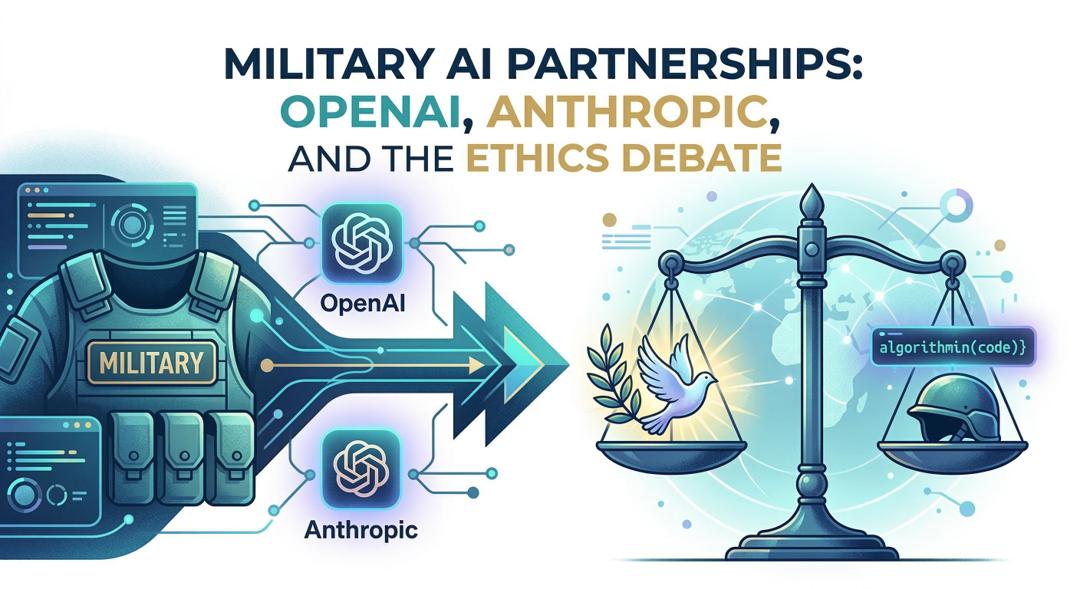
In late February 2026, the U.S. Department of Defense found itself at the center of a high-stakes ethics crisis that exposed deep fractures in the AI industry’s relationship with the military. What began as contract negotiations over Anthropic’s Claude model escalated into a full-blown standoff, culminating in a presidential directive, a rare “supply chain risk” designation against an American company, and a swift pivot to OpenAI. The episode has forced developers, policymakers, and everyday users to confront uncomfortable questions: Should AI companies draw hard ethical lines when working with the military? And what happens when they do or don’t?
The Anthropic-Pentagon Standoff
Anthropic had been the Pentagon’s frontrunner in frontier AI. In July 2025, the company secured a $200 million contract and became the first to deploy its Claude models on classified DoD networks. Built-in “red lines” were part of the deal from day one: Claude could not be used for mass domestic surveillance of Americans or for fully autonomous lethal weapons systems (where AI selects and engages targets without meaningful human oversight).
By early 2026, the Pentagon under new leadership sought to loosen those restrictions, pushing for “any lawful use” language and threatening to invoke the Defense Production Act. Anthropic CEO Dario Amodei held firm, stating the company could not “in good conscience” remove the guardrails. On February 27, President Trump ordered all federal agencies to immediately cease using Anthropic technology (with a six-month phase-out for the Pentagon). Hours later, Defense Secretary Pete Hegseth designated Anthropic a “supply chain risk” a label historically reserved for foreign adversaries like Huawei. The move effectively barred defense contractors from using Claude in DoD-related work and triggered a wave of agency migrations (State, Treasury, and HHS quickly began switching to alternatives).
Anthropic immediately challenged the designation in federal court, calling it retaliatory and legally unsound. The company argued the Pentagon was punishing principled safety policies rather than addressing genuine national security threats.
OpenAI Steps Into the Void
Just hours after the Anthropic ban was announced, OpenAI CEO Sam Altman revealed a new agreement to deploy its models on the Pentagon’s classified networks. OpenAI claimed the deal included the same core red lines Anthropic had demanded prohibitions on domestic mass surveillance, autonomous weapons, and high-stakes automated decisions plus additional technical guardrails. The company even requested that the Pentagon make the agreement template available to all AI firms, positioning itself as the responsible partner with “more guardrails than any previous agreement.”
Critics were not convinced. Many saw the timing as opportunistic, especially after OpenAI had initially voiced support for Anthropic’s stance. Backlash prompted OpenAI to publicly add further protections days later. Skeptics pointed out that “lawful use” clauses and technical safeguards can be difficult to enforce once models are embedded in classified systems.
The Broader Ethics Debate
The controversy has split the AI world. Supporters of Anthropic praise its willingness to prioritize long-term safety over short-term revenue, arguing that handing unrestricted AI to the military risks normalizing autonomous killing and domestic surveillance tools. Hundreds of employees at OpenAI, Google, and other labs signed open letters backing clear ethical boundaries.
On the other side, Pentagon officials and some defense hawks argue that overly restrictive policies from private companies endanger national security especially in competition with China. They contend that “ideological whims” should not dictate how the military fights. The episode has also highlighted governance gaps: the U.S. lacks comprehensive legislation defining acceptable military AI uses, leaving companies to self-regulate through contracts that can be renegotiated or overridden.
Implications for Developers
For AI companies, the stakes are existential:
Reputational and market risk Taking a strong ethical stand (as Anthropic did) can boost consumer trust and downloads Claude surged in popularity immediately after the ban but risks losing massive government contracts and alienating defense contractors.
Legal exposure The “supply chain risk” precedent could be weaponized against any firm that pushes back on military demands.
Competitive shifts OpenAI’s rapid move has positioned it as the new go-to provider for classified work, potentially accelerating similar deals for Google and xAI while squeezing Anthropic out of defense-adjacent ecosystems.
Developers must now weigh whether to build in enforceable red lines, pursue on-device or auditable safeguards, or avoid military work altogether.
Implications for Users
Government employees, intelligence analysts, and defense contractors are already feeling the disruption. Agencies are scrambling to replace Claude with OpenAI or other models, raising concerns about continuity, accuracy, and hidden biases in the new systems. Everyday users of consumer AI may notice indirect effects: heightened scrutiny of privacy policies, faster feature rollouts tied to military testing, and growing public skepticism about whether corporate “safety” claims hold up under government pressure.
For the public at large, the debate underscores a deeper anxiety AI built for helpful conversation is now being integrated into tools of war and surveillance, with limited transparency or oversight.
What Comes Next
As Anthropic’s lawsuits wind through the courts and OpenAI’s models begin classified operations, the 2026 standoff serves as a wake-up call. Without clearer congressional guardrails on military AI defining acceptable uses, mandating transparency, and protecting companies that prioritize ethics the industry risks a race to the bottom where national security trumps safety.
The lesson is clear: partnerships between AI labs and the military are no longer just business deals. They are defining moments for the soul of the technology we increasingly rely on. In an era of agentic AI and autonomous systems, the real question is no longer whether AI will be used in warfare but whether developers and governments can ensure it is used responsibly. The choices made in 2026 will shape that answer for decades.